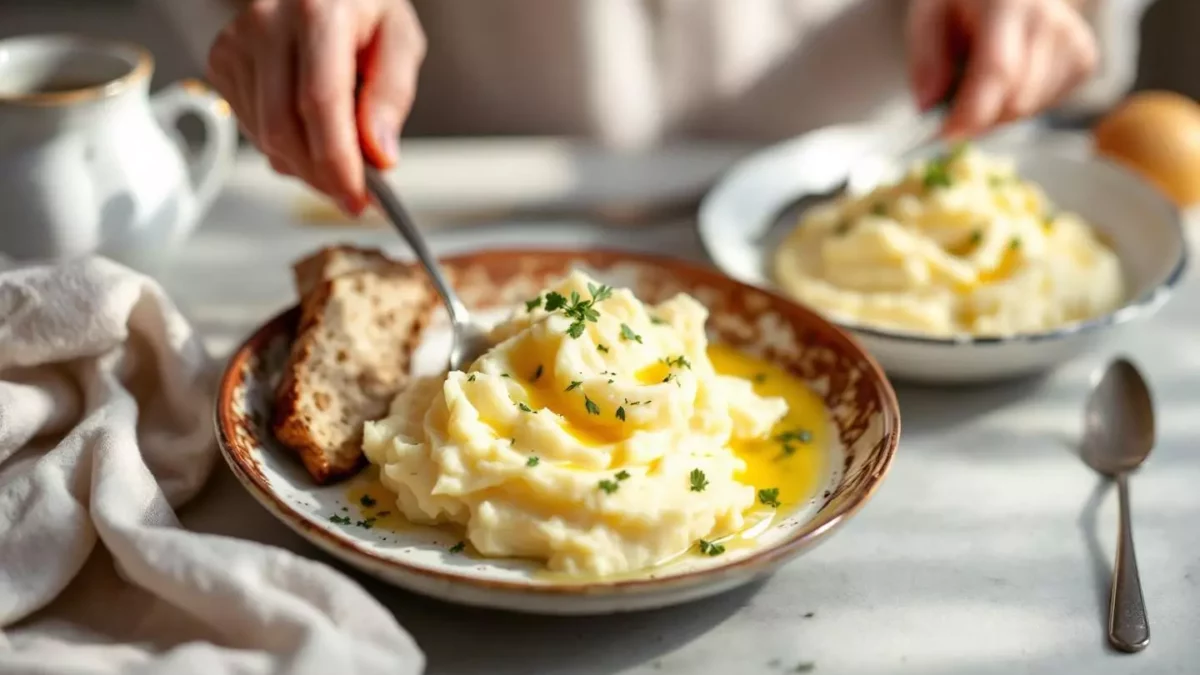
There’s something magical about a bowl of perfectly smooth, buttery mashed potatoes that takes me back to my first Thanksgiving dinner in Paris.
I was staying with a French family who had embraced this American tradition, and watching my host mother Madame Dubois transform humble potatoes into silky perfection using classical French techniques was a revelation.
Today, I’m sharing her secrets for creating the creamiest, most luxurious mashed potatoes that will elevate any meal from ordinary to extraordinary.
Why French Technique Makes All the Difference
The secret to restaurant-quality mashed potatoes lies in understanding what French chefs have known for centuries: it’s all about the proper potato variety and the right amount of fat.
Unlike the often gluey, lumpy versions we sometimes encounter, true French-style purée de pommes de terre achieves its legendary smoothness through careful technique and generous butter incorporation.
Julia Child herself emphasized in “Mastering the Art of French Cooking” that the key is working the potatoes while they’re piping hot and adding warm dairy gradually.
Choosing the Perfect Potatoes for Silky Results
Not all potatoes are created equal when it comes to mashing.
Russet potatoes are my go-to choice because their high starch content creates that fluffy, absorbent texture that soaks up butter and cream beautifully. Yukon Gold potatoes work wonderfully too, offering a naturally buttery flavor and creamy texture that requires less added fat.
Avoid waxy potatoes like red or fingerlings – they’ll give you a gummy, dense result that no amount of butter can save.
The French Secret: Temperature and Timing Matter
Here’s where most home cooks go wrong: they let their potatoes cool before mashing.
In France, we work quickly while everything is hot because warm potatoes absorb dairy more effectively than cold ones.
This technique, which I learned watching the skilled cooks at Le Procope in Paris, ensures every granule of potato is coated in silky richness. Always warm your butter, cream, and milk before adding them – this prevents the potatoes from cooling down and seizing up.
Essential Tools for Professional-Quality Results
While you don’t need expensive equipment, having the right tools makes a significant difference.
A potato ricer or food mill creates the smoothest texture, but a good old-fashioned potato masher works perfectly fine for home cooking. Never use a food processor or blender – the aggressive action will develop the gluten in the potatoes, creating an unpleasantly gluey texture.
A sturdy wooden spoon for stirring and a fine-mesh strainer for the ultimate smooth finish complete your toolkit.
Make-Ahead Tips for Stress-Free Entertaining
One of the best things about this recipe is how well it adapts to entertaining schedules.
You can make these mashed potatoes up to two days ahead and reheat them gently with a splash of warm cream.
For holiday dinners, I often prepare them in the morning and keep them warm in a slow cooker on low heat, stirring occasionally.
They also freeze beautifully for up to three months – just thaw overnight and reheat with additional butter and cream to restore their silky texture.
| Smooth and Buttery French-Style Mashed Potatoes | |
|
|
|
| Silky, restaurant-quality mashed potatoes using classical French techniques for the creamiest, most luxurious side dish you’ve ever tasted. | |
| Author: | Sarah Mitchell | Side Dish | French-American |
| Prep Time: | |
| Cook Time: | |
| Total Time: | |
| Servings: | Serves 6-8 |
| 🥄 INGREDIENTS | |
|
|
| 👩🍳 INSTRUCTIONS | |
|
|
|
🥐 Sarah’s Pro Tip |
|
|
The secret to achieving that silky French restaurant texture is to work in stages: first the butter for richness and flavor, then the warm dairy for creaminess. |
|
| Keywords: | mashed potatoes, French cooking, side dish, butter, cream, holiday recipes |
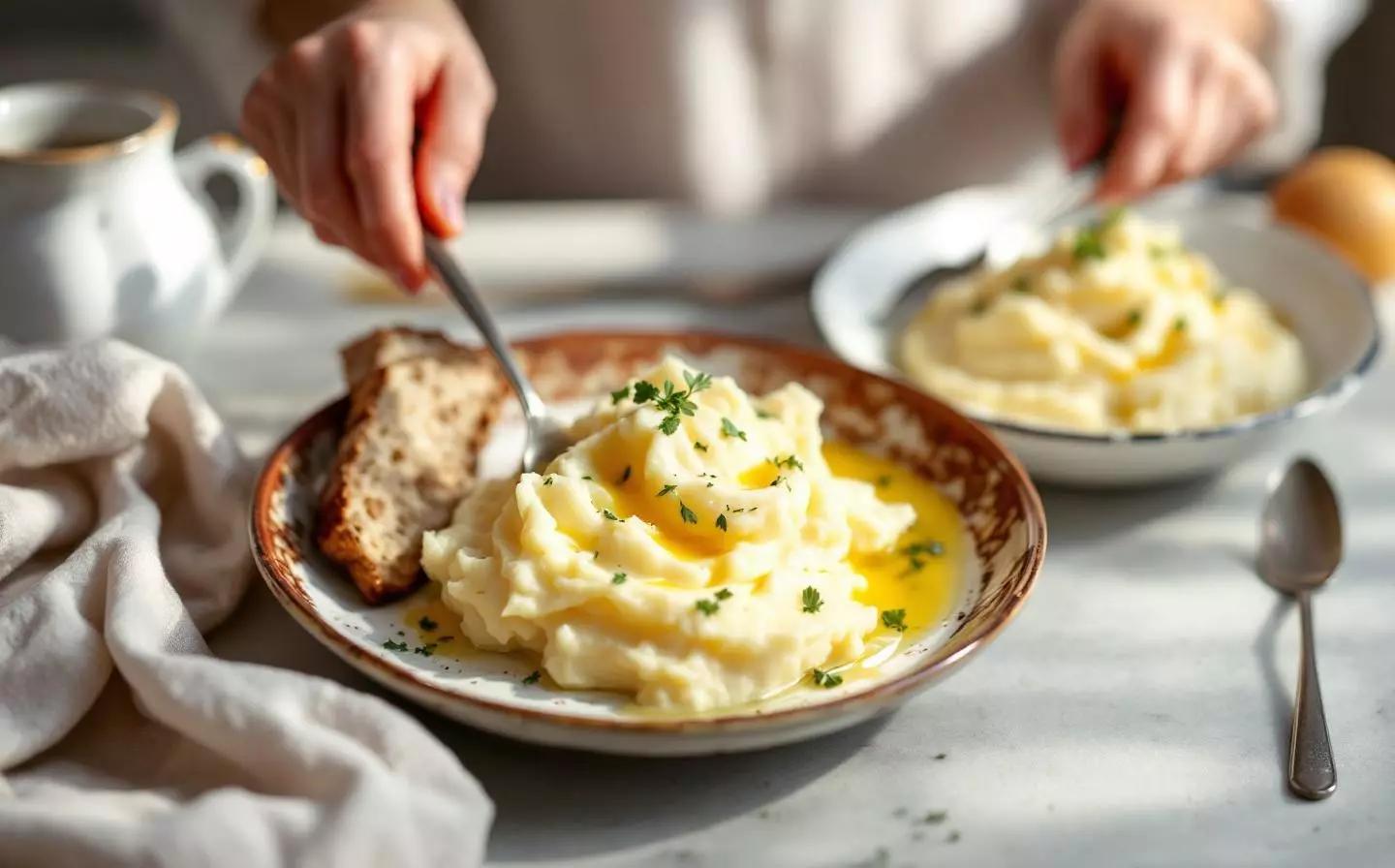
These mashed potatoes pair beautifully with everything from roasted chicken to beef bourguignon, and they’re absolutely essential for Thanksgiving and Christmas dinners.
The technique might seem involved, but once you master this French approach, you’ll never go back to ordinary mashed potatoes again.
I love hearing from fellow Buffalo Bakery readers about their cooking successes – please share your photos and variations in the comments below!
Bon appétit, and happy cooking from my kitchen to yours!