
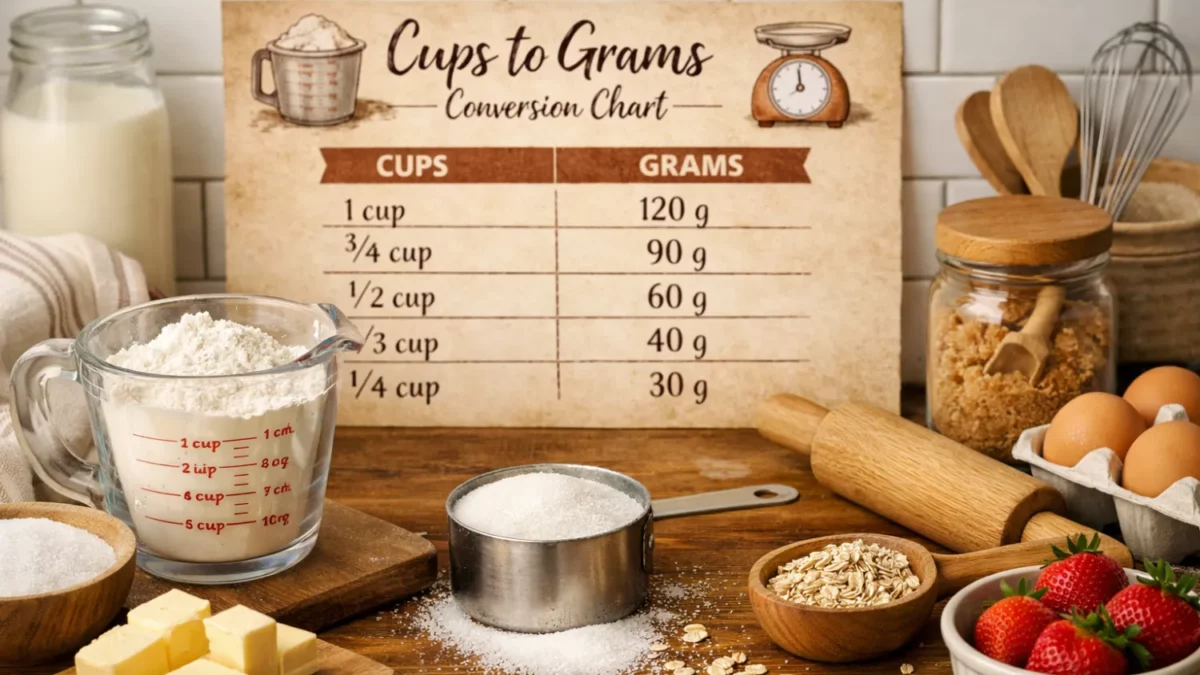
Picture this: you’re standing in your kitchen at 8 PM, desperately wanting to recreate that perfect pain de mie from my favorite Parisian boulangerie, Du Pain et des Idées. The recipe calls for 250g of flour, but your measuring cups are staring back at you mockingly.
I’ve been there countless times, and it’s exactly why I created this comprehensive kitchen conversion guide. After years of translating French recipes for my American kitchen, I’ve learned that precision in baking isn’t just helpful—it’s absolutely essential for success.
Why French Bakers Swear by Weight Measurements
During my time studying at Le Cordon Bleu in Paris, Chef Philippe would always say, “La précision, c’est la clé” (precision is the key). French bakers have used weight measurements for centuries because they’re simply more accurate.
When you scoop flour with a cup, you might pack in anywhere from 120g to 150g depending on humidity, how you scoop, and even the brand of flour. But 125g of flour is always exactly 125g—no guessing games.
The difference between success and disaster in delicate pastries like macarons or croissants often comes down to these precise measurements. That’s why every serious French baker keeps a kitchen scale within arm’s reach.
Essential Baking Conversions: Your Go-To Reference Chart
I remember frantically scribbling conversions in the margins of my copy of Julia Child’s “Mastering the Art of French Cooking” during my early baking days. Now, I keep this chart taped inside my pantry door, and I’m sharing my most-used conversions with you.
These measurements are based on the scoop-and-level method for dry ingredients, which gives you the most consistent results when you don’t have a scale available.
Flour Conversions (All-Purpose)
• 1 cup = 125g (4.4 oz)
• 1/2 cup = 63g (2.2 oz)
• 1/3 cup = 42g (1.5 oz)
• 1/4 cup = 31g (1.1 oz)
Pro insight: French T55 flour (their all-purpose equivalent) behaves similarly to American all-purpose, so these conversions work beautifully for traditional French recipes.
Sugar Conversions
• 1 cup granulated sugar = 200g (7 oz)
• 1 cup brown sugar (packed) = 220g (7.8 oz)
• 1 cup powdered sugar = 120g (4.2 oz)
• 1 cup superfine sugar = 190g (6.7 oz)
Butter and Fat Conversions
• 1 cup (2 sticks) butter = 226g (8 oz)
• 1/2 cup (1 stick) butter = 113g (4 oz)
• 1 tablespoon butter = 14g (0.5 oz)
• 1 cup vegetable oil = 220g (7.8 oz)
How to Measure Like a French Pastry Chef
The first time I watched a chef pâtissier at work in a tiny Montmartre bakery, I was amazed by their methodical approach. Every ingredient was weighed, never scooped. Here’s how you can bring that same precision to your American kitchen.
For dry ingredients without a scale: Use the spoon-and-level method. Gently spoon flour into your measuring cup, then level off with a knife. Never pack or tap the cup—this can add up to 30% more ingredient than intended.
For wet ingredients: Use liquid measuring cups at eye level. The meniscus (that little curve at the liquid’s surface) should align with your measurement line.
Temperature Conversions You Actually Need
French recipes often use Celsius, so here are the most common baking temperatures:
• 325°F = 165°C (low and slow baking)
• 350°F = 175°C (standard baking temperature)
• 375°F = 190°C (cookies and quick breads)
• 425°F = 220°C (crusty breads and pastries)
• 450°F = 230°C (pizza and high-heat baking)
Common Conversion Mistakes That Ruin Recipes
I learned this lesson the hard way when attempting Jacques Pépin’s pâte brisée recipe. I eyeballed the flour measurement and ended up with pastry dough that resembled wet concrete rather than the silky, pliable dough Jacques demonstrates so effortlessly.
Mistake #1: Assuming all cup measurements are equal. Different ingredients have vastly different weights per cup.
Mistake #2: Not accounting for ingredient temperature. Cold butter weighs the same as room temperature butter, but it behaves completely differently in recipes.
Mistake #3: Converting liquids and solids the same way. A cup of water weighs 240g, but a cup of flour weighs only 125g.
Master Kitchen Conversion Chart for Baking |
|
|
|
|
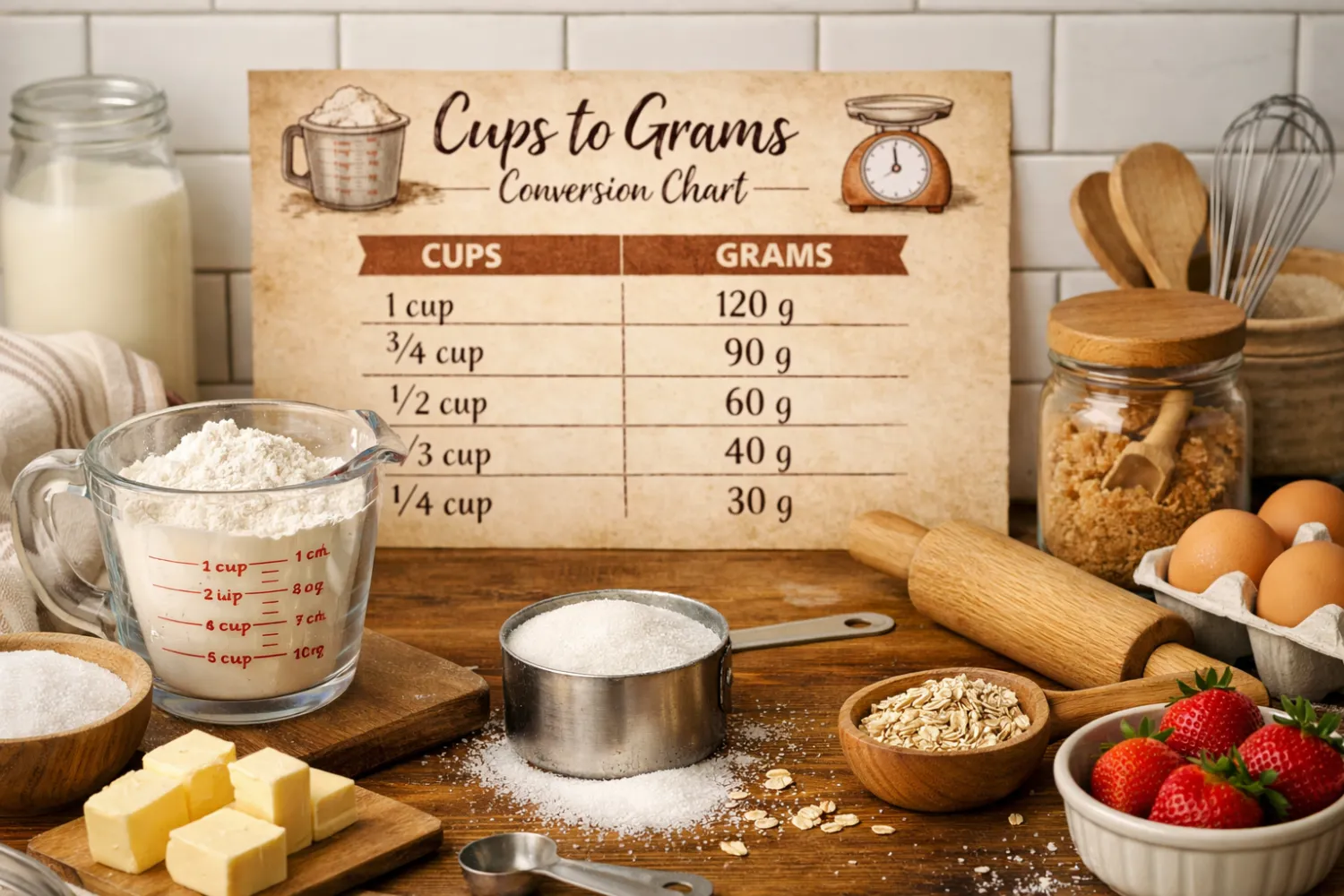
Your essential reference guide for converting between cups, grams, and ounces in baking. From flour and sugar to butter and liquids, this comprehensive chart brings French baking precision to your American kitchen – bookmark it, print it, and keep it forever.
|
|
|
Author: Sarah – Buffalo Bakery
Category: Baking Tips, Reference Guide
Cuisine: French, American
|
|
|
Prep Time: 2 minutes Total Time: 2 minutes |
Yield: Reference for all recipes |
Essential Flour Conversions |
|
| 1 cup all-purpose flour | 125g (4.4 oz) |
| 1 cup bread flour | 130g (4.6 oz) |
| 1 cup cake flour | 115g (4.1 oz) |
Sugar & Sweetener Conversions |
|
| 1 cup granulated sugar | 200g (7 oz) |
| 1 cup brown sugar (packed) | 220g (7.8 oz) |
| 1 cup powdered sugar | 120g (4.2 oz) |
Butter & Fat Conversions |
|
| 1 cup (2 sticks) butter | 226g (8 oz) |
| 1/2 cup (1 stick) butter | 113g (4 oz) |
| 1 tablespoon butter | 14g (0.5 oz) |
| 🥐 Sarah’s Pro Tip | |
|
Print this chart and laminate it! I keep mine tucked inside my favorite mixing bowl, so it’s always within reach when I’m baking. For the most accurate results, invest in a digital kitchen scale that measures in both grams and ounces. It’s the single best upgrade you can make to your baking game—just like the French masters have known for centuries. |
|
| Keywords: kitchen conversions baking, cups to grams, grams to ounces, baking measurements, French baking conversions, flour conversion chart, butter conversion, sugar conversion | |
Having accurate conversions at your fingertips transforms your baking from guesswork into an art form. Whether you’re tackling Julia Child’s classic tarte tatin or experimenting with your own creations, these measurements will be your trusty companions.
I’d love to hear how these conversions help you in your own kitchen adventures! Drop me a note in the comments below, and don’t forget to share your beautiful baking successes with our Buffalo Bakery community. Bon appétit, and happy baking!