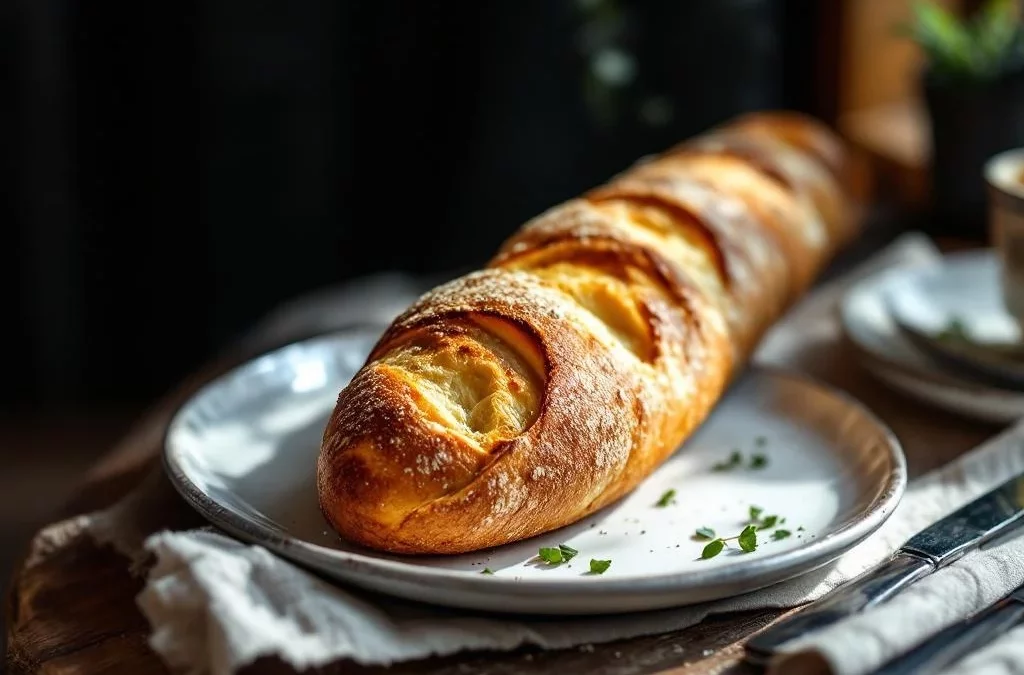
There’s nothing quite like the sound of a perfectly baked French baguette – that satisfying crack when you break through the golden, crispy crust to reveal the airy, holey interior. I’ll never forget my first morning in Paris, stumbling into a tiny boulangerie on Rue des Martyrs, watching the baker pull dozens of these golden beauties from his wood-fired oven.
Today, I’m sharing the secrets I learned from that Parisian master baker, adapted for your American kitchen. This recipe creates an authentic French baguette with that coveted crispy crust and perfect alvéolage (the beautiful holes inside).
Why French Baguettes Are Different from American Bread
Authentic French baguettes follow strict regulations – they can only contain four ingredients: flour, water, salt, and yeast. No oils, no sugar, no preservatives.
The magic happens through technique: proper hydration, long fermentation, and most importantly, creating steam during baking to achieve that signature crispy crust. Julia Child famously struggled with baguettes in her early days, calling them “the Mount Everest of bread baking,” but with the right approach, they’re absolutely achievable in your home oven.
The Secret to Crispy Crust: Steam and High Heat
The biggest challenge American home bakers face is replicating the steam-injected professional ovens used in French bakeries. My Parisian baker friend taught me this genius trick: place a cast iron pan on your oven’s bottom rack and pour boiling water into it right when you slide in your baguettes.
This creates an instant steam bath that keeps the crust from setting too quickly, allowing maximum oven spring and that coveted crispy exterior. You’ll also want to bake at a screaming hot 475°F (246°C) – much hotter than most American bread recipes suggest.
Shaping Perfect Baguettes: The French Technique
Shaping baguettes is an art form that takes practice. The key is creating tension in the dough while maintaining those precious air bubbles from fermentation.
Start by gently flattening your dough into a rectangle, then fold it like a business letter. Roll from the center outward, using the heel of your hand to create a seam. The final step – rolling to your desired length – should be done with gentle, even pressure. Don’t worry if your first attempts aren’t perfectly uniform; even Parisian bakers have slight variations!
Timing and Fermentation for Maximum Flavor
Authentic French baguettes develop their complex flavor through slow fermentation. This recipe uses a two-stage process: an initial rise, then shaping, followed by a final proof.
The dough should feel slightly sticky and alive – this high hydration creates those beautiful holes. If you have time, try the overnight method: after the first rise, refrigerate the dough overnight and shape the next morning. This extended fermentation develops incredible depth of flavor, just like the baguettes at Poilâne in Saint-Germain.
| French Baguette with Crispy Crust | |
| Prep: 30 minutes | Rise Time: 3.5 hours |
| Bake: 25 minutes | Yield: 3 baguettes |
Ingredients
|
|
Instructions
|
|
| 🥐 Sarah’s Pro Tip | |
|
The secret to those gorgeous slashes is using a lame (pronounced “lahm”) or a very sharp knife held at a 30-degree angle. Make quick, confident cuts about ¼ inch deep – hesitation leads to dragging and deflated dough! If you don’t have a cast iron pan, place a rimmed baking sheet on the bottom rack and throw in a handful of ice cubes when you put the bread in. The ice creates instant steam and gives you that perfect crispy crust. |
|
There’s something deeply satisfying about pulling your own golden baguettes from the oven, hearing that telltale crackling as they cool. These baguettes are best enjoyed within hours of baking – just like in Paris, where locals buy their daily bread fresh each morning.
Serve these beauties with good butter and flaky sea salt, or use them for the ultimate French sandwich. I’d love to hear how your baguettes turn out! Share your photos with our Buffalo Bakery community – there’s nothing I enjoy more than seeing your French baking successes.