
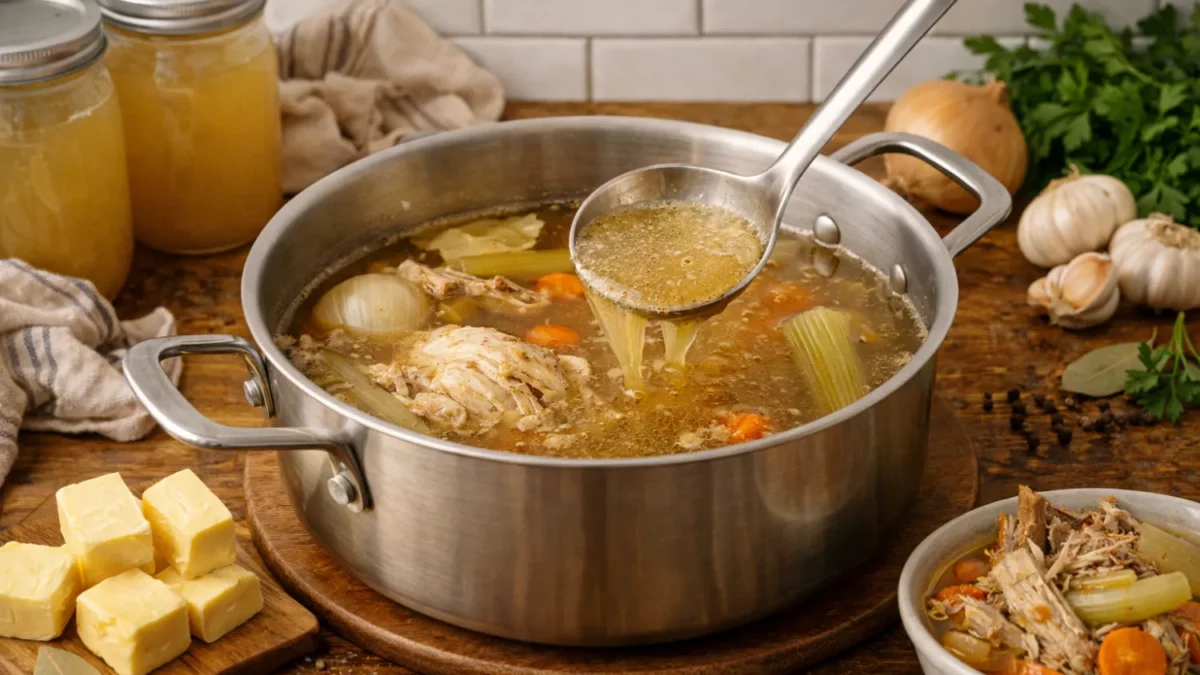
There’s something deeply satisfying about the gentle simmer of homemade chicken stock bubbling away on your stovetop. Rich, golden, and gelatinous – the kind that sets like velvet when chilled – this isn’t just any stock.
I learned to make proper stock during my first winter in Paris, watching the chef at Bistro Paul Bert transform humble chicken bones into liquid gold. That gelatinous wobble when you tap the cooled stock? That’s pure collagen, and it’s exactly what transforms ordinary soups into restaurant-quality masterpieces.
Today I’m sharing the classic French technique that’ll give you the richest, most flavorful chicken stock you’ve ever made – right in your American kitchen.
Why French Chefs Swear by Gelatinous Chicken Stock
When Jacques Pépin talks about stock, he always emphasizes one thing: the gelatin. That wiggly, set consistency isn’t just impressive – it’s the hallmark of a stock packed with collagen extracted from bones and connective tissue.
In French cooking, we call this “fond de volaille” (chicken foundation), and it truly is the foundation of countless dishes. A proper gelatinous stock adds body, richness, and depth that you simply can’t get from store-bought versions.
The secret lies in using the right bones, maintaining a gentle simmer, and giving it time – lots of time.
What Makes Stock Gelatinous (And Why You Want It)
That magical gel-like texture comes from collagen breaking down into gelatin during the long, slow cooking process. Chicken feet, wing tips, and backs are absolute goldmines for collagen.
I remember being skeptical about chicken feet until I visited Les Halles market in Paris. The vendor explained how French grandmothers never made stock without them – and after one taste of that silky, rich stock, I was converted.
If chicken feet aren’t your thing (I get it!), focus on using plenty of joints, wing tips, and backs. These parts contain the most connective tissue and will give you that coveted wobble.
Common American Stock-Making Mistakes to Avoid
Having taught this technique to countless home cooks, I’ve noticed the same mistakes pop up again and again:
Mistake #1: Boiling instead of simmering. A rolling boil creates cloudy, greasy stock. We want barely bubbling – what the French call “frémir” (to shiver).
Mistake #2: Not skimming the foam. Those gray bubbles that rise to the surface? Skim them off religiously for crystal-clear stock.
Mistake #3: Rushing the process. Great stock needs 8-12 hours minimum. I often start mine in the evening and let it simmer overnight.
How to Use Your Liquid Gold
Once you’ve made this restaurant-quality stock, you’ll find yourself using it everywhere. It transforms simple rice into risotto, elevates gravies, and makes the most comforting soups.
I love freezing mine in ice cube trays for easy portioning. Each cube is about 2 tablespoons – perfect for deglazing pans or adding richness to sauces.
During cold Portland winters, I keep a constant supply in my freezer. There’s nothing more comforting than knowing you have homemade stock ready for whatever culinary adventure awaits.
Rich & Gelatinous Chicken Stock |
|
|
|
|
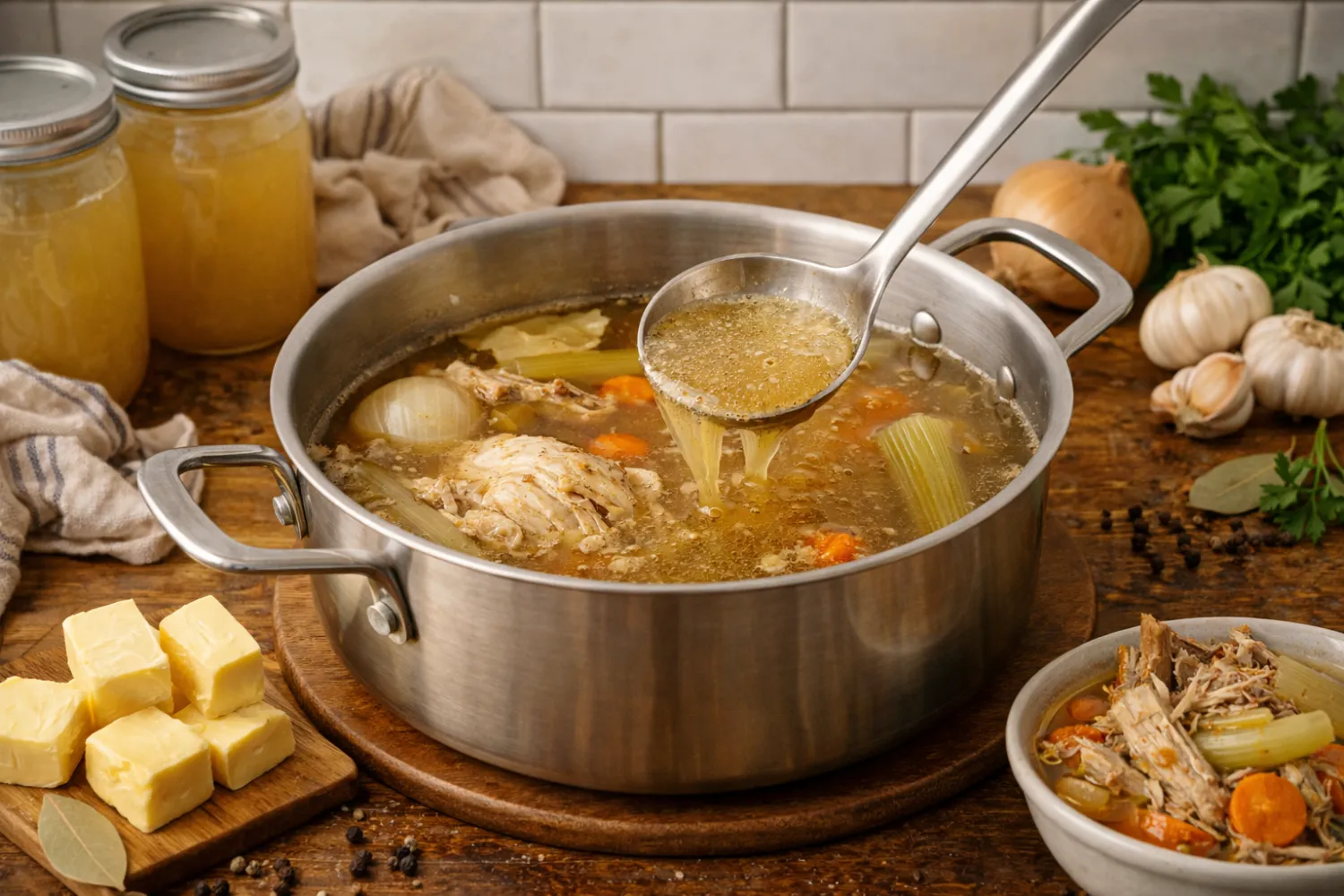
The classic French technique for making rich, golden, gelatinous chicken stock that sets like velvet when chilled. Packed with collagen and deep flavor, this fond de volaille is the secret foundation behind every restaurant-quality soup, sauce, and risotto.
|
|
|
Author: Sarah – Buffalo Bakery
Category: Stock, Soup Base, French Technique
Cuisine: French
|
|
|
Prep Time: 20 minutes Cook Time: 10 hours |
Total Time: 10 hours 20 minutes Yield: About 3 quarts |
Ingredients |
|
|
|
Instructions |
|
|
|
| 🥐 Sarah’s Pro Tip | |
|
The test for perfect gelatinous stock? It should wobble like Jell-O when chilled! If your stock isn’t setting, it means you need more collagen-rich bones next time. I always save chicken carcasses from roast dinners in my freezer until I have enough for stock. Roasted bones actually add even more flavor than raw ones – just skip the initial browning step. |
|
|
Nutrition Information (per cup):
Calories: 38 | Protein: 5g | Fat: 1g | Carbs: 2g | Sugar: 1g |
|
| Keywords: homemade chicken stock, gelatinous chicken stock, fond de volaille, French chicken stock, how to make chicken stock, bone broth, rich chicken broth | |
Making your own gelatinous chicken stock is one of those fundamental skills that’ll elevate every dish you make. Yes, it takes time, but most of that is hands-off simmering while you go about your day.
Once you taste the difference this rich, silky stock makes in your cooking, you’ll never go back to the store-bought stuff. Trust me on this one – your soups, risottos, and gravies will thank you.
I’d love to hear how your stock turns out! Share your photos and tips with our Buffalo Bakery community – there’s nothing quite like the pride of mastering this classic French technique.