
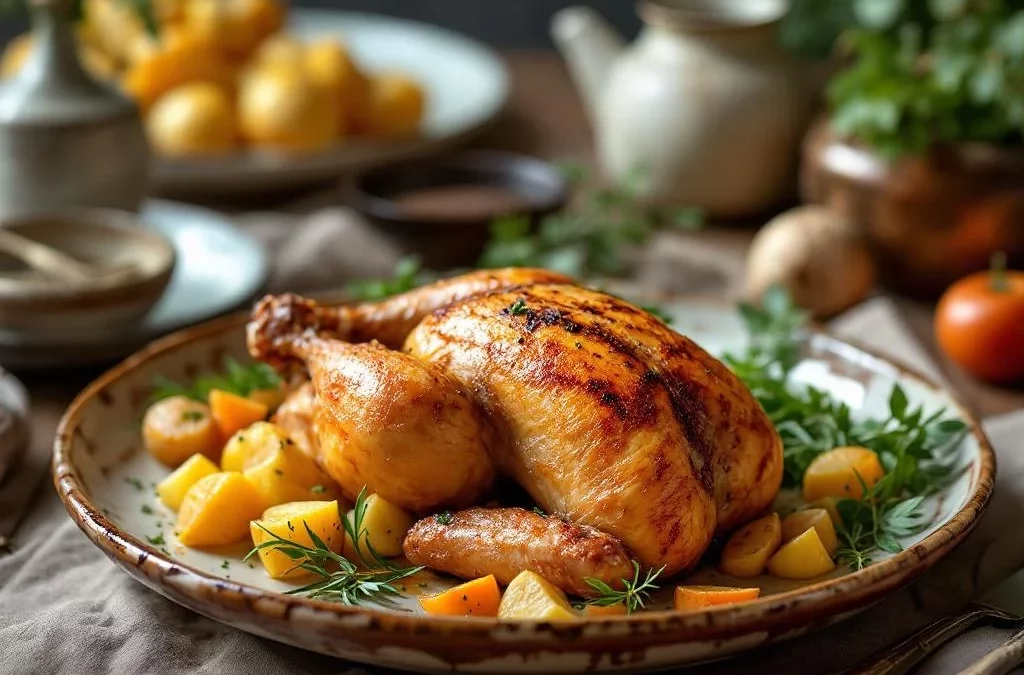
There’s something magical about the way a perfectly roasted chicken fills your kitchen with the most incredible aroma. French roast chicken, or poulet rôti, is the cornerstone of French home cooking – simple, elegant, and absolutely foolproof when you know the secrets.
I’ll never forget my first taste of authentic poulet rôti at a tiny bistro near the Marché des Enfants Rouges in Paris. The skin was impossibly crispy, crackling under my fork, while the meat remained tender and juicy. The chef’s secret? A technique so simple, I couldn’t believe American cookbooks had been overcomplicating it for years.
Why French Roast Chicken is Different from American Methods
The French approach to roast chicken is all about simplicity and technique over complicated seasonings. While American recipes often call for elaborate rubs and stuffings, the French focus on three key elements: proper trussing, high heat, and minimal interference.
Jacques Pépin, the master of French technique, always emphasizes that good chicken needs very little – just salt, pepper, butter, and the right temperature. This philosophy transforms an ordinary bird into something extraordinary.
The biggest difference? French cooks start their chicken at a blazing 425°F (220°C) and resist the urge to constantly baste or fiddle with it. This high heat creates that coveted peau croustillante (crispy skin) that makes French roast chicken legendary.
The Secret to Perfectly Crispy Skin Every Time
Here’s where most American home cooks go wrong: they’re afraid of high heat and they don’t properly dry the chicken. Moisture is the enemy of crispy skin, and the French have known this for centuries.
The technique I learned in that Parisian kitchen starts 24 hours before cooking. You salt the chicken and leave it uncovered in the refrigerator overnight. This process, called dry-brining, draws out moisture while seasoning the meat thoroughly.
On cooking day, pat the skin completely dry and rub it with room temperature butter. The combination of dry skin and high heat creates steam that literally puffs the skin away from the meat, making it irresistibly crispy.
Essential French Techniques for Perfect Results
Trussing your chicken might seem old-fashioned, but it’s crucial for even cooking. French cooks tie the legs and tuck the wings not for aesthetics, but because it helps the bird cook uniformly.
Temperature control is equally important. Start high for the first 20 minutes to crisp the skin, then reduce to 375°F (190°C) to gently finish the meat. This two-stage approach prevents the outside from burning while ensuring the thickest parts reach 165°F (74°C).
Finally, resist the urge to baste. Every time you open the oven, you release precious heat and add moisture back to the skin. Trust the process – the French way works.
Wine Pairing and Serving Suggestions
In France, poulet rôti is Sunday dinner perfection, often paired with roasted root vegetables and a simple green salad. A crisp Sancerre or light Burgundian Pinot Noir complements the rich, crispy skin beautifully.
For American tables, this chicken shines at holiday gatherings when you want something elegant but not overwhelming. Serve it with garlic mashed potatoes and seasonal vegetables for a meal that feels both sophisticated and comforting.
| French Roast Chicken with Crispy Skin (Poulet Rôti) | |
| Prep Time: | 15 minutes (plus overnight drying) |
| Cook Time: | 1 hour |
| Total Time: | 1 hour 15 minutes |
| Serves: | 4-6 people |
| Ingredients | |
|
|
| Instructions | |
|
|
| 🥐 Sarah’s Pro Tip | |
|
The overnight drying step is absolutely crucial – don’t skip it! If you’re short on time, pat the chicken dry and let it sit uncovered in the fridge for at least 4 hours. For extra flavor, slip a few herb sprigs under the skin before roasting. Tarragon and rosemary work beautifully and give you that authentic French bistro taste. |
|
This poulet rôti recipe has become my go-to for Sunday dinners and special occasions. There’s something so satisfying about mastering this fundamental French technique – it connects you to generations of home cooks who understood that simple ingredients, treated with respect, create the most memorable meals.
I hope this brings a little piece of that Parisian magic to your kitchen. Tag me @buffalo_bakery when you make it – I love seeing your crispy-skinned successes! Until next time, happy cooking from all of us at Buffalo Bakery.