
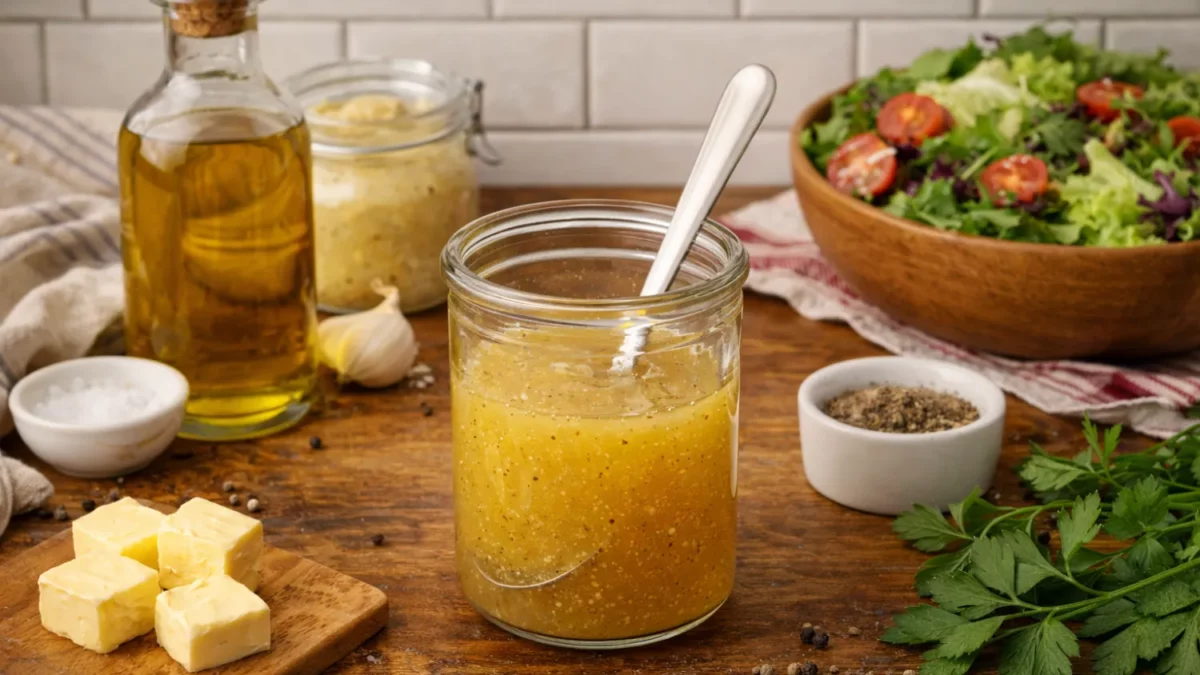
There’s something almost embarrassingly simple about the best salad dressing in the world. I remember the moment it clicked for me – sitting at a tiny zinc-topped table at Café de Flore in Paris, watching the waiter toss a simple green salad tableside with nothing more than a drizzle of oil, a splash of vinegar, and a confident flick of his wrist. The result was the most perfectly dressed salad I’d ever tasted.
That was the day I stopped buying bottled dressing forever. Because here’s the truth: classic French vinaigrette takes less than two minutes to make, costs almost nothing, and tastes infinitely better than anything you’ll ever find in a store. Today, I’m sharing the exact ratio that French home cooks have sworn by for generations – and the secrets that make all the difference.
Why French Vinaigrette Is in a League of Its Own
Walk into any French home kitchen and you’ll find a small jar on the counter – often a recycled mustard jar – filled with that golden, perfectly emulsified dressing. It’s not fancy. It doesn’t need to be. What makes French vinaigrette so extraordinary is the philosophy behind it: respect for quality ingredients in their simplest form.
American salad dressings tend toward sweetness, creaminess, and complexity. Ranch, Thousand Island, honey mustard – they’re all designed to mask and overpower. French vinaigrette does the opposite. It’s bright, tangy, and assertive enough to enhance every leaf without stealing the spotlight.
When Julia Child first introduced Americans to this simple dressing in the 1960s, she was amazed that something so effortless could be so revelatory. Jacques Pépin still makes his vinaigrette the same way his mother taught him – by feel, by smell, and by taste. That’s the beauty of mastering this recipe: once you understand the ratio, you’ll never need to measure again.
The Perfect French Vinaigrette Ratio (And Why It Works)
Every culinary school in France teaches the same fundamental ratio: 3 parts oil to 1 part acid. This isn’t arbitrary – it’s science. Too much acid and your dressing is harsh and mouth-puckering. Too much oil and it’s flat and greasy. At a 3:1 ratio, the flavors are perfectly balanced, allowing both the richness of the oil and the brightness of the vinegar to shine through.
In practice, this means for every tablespoon of vinegar, you use three tablespoons of olive oil. Simple. Elegant. Foolproof.
But here’s what separates a good vinaigrette from a great one: the Dijon mustard. Beyond its flavor contribution, mustard acts as an emulsifier – the magic ingredient that binds oil and vinegar together into a creamy, cohesive dressing rather than a separated, oily mess. This is the trick that every French grandmother knows, and it makes all the difference.
Choosing the Right Oil and Vinegar
The ratio is the foundation, but your ingredients are the building blocks. Getting these right is what elevates a simple vinaigrette into something truly memorable.
For the oil: A good extra-virgin olive oil is the classic choice, and for good reason. Look for one that’s fruity and peppery – something you’d happily dip bread into. I use a medium-intensity olive oil for everyday vinaigrette, saving my pricier finishing oils for special occasions. Avoid light olive oil, which has been processed to remove most of the flavor you’re paying for.
For the vinegar: Red wine vinegar is the traditional French choice, and it’s my personal favorite. It has just the right acidity without being overpowering. White wine vinegar works beautifully too, producing a slightly lighter, more delicate dressing. For something more complex, try a good-quality Sherry vinegar – it adds a wonderful nutty depth that pairs beautifully with bitter greens like frisée or endive.
What about balsamic? Save it for other applications. True French vinaigrette doesn’t use balsamic – its sweetness fundamentally changes the character of the dressing.
The Dijon Mustard Question: Which One to Use
Not all Dijon mustard is created equal, and this matters more than you might think. During my time living near the Marché des Enfants Rouges in Paris, I learned to be very particular about my mustard.
Look for authentic French Dijon mustard – Maille is widely available across American supermarkets and is the gold standard. Avoid American-style yellow mustard entirely – it’s too mild and sweet to work properly here. Grey Poupon, while American-made, is actually a decent substitute when you can’t find Maille.
The amount matters too. Too little and your dressing won’t emulsify properly; too much and the mustard flavor dominates everything. The sweet spot is about half a teaspoon per two tablespoons of vinegar – just enough to bind and flavor without overwhelming.
Five Secrets French Cooks Know About Vinaigrette
After years of making this dressing and learning from French home cooks, I’ve gathered a handful of tips that make a genuine difference:
Secret #1: Always dissolve your salt in the vinegar first. Salt doesn’t dissolve in oil – only in water-based liquids. If you add salt directly to your finished vinaigrette, it’ll never incorporate properly. Whisk your salt into the vinegar until dissolved before adding anything else.
Secret #2: Add the oil slowly. Even when making a small batch by hand, pouring the oil in a thin, steady stream while whisking creates a much more stable emulsion than dumping everything in at once. Those extra thirty seconds make a real difference in texture.
Secret #3: Use a jar. The simplest and most foolproof method is to combine everything in a glass jar and shake vigorously for about thirty seconds. The jar method creates a perfectly emulsified dressing every single time, with zero cleanup beyond rinsing the jar. This is how most French home cooks actually make their vinaigrette.
Secret #4: Season at the end. Always taste your vinaigrette after it’s fully emulsified, not before. The balance of flavors changes once the oil and vinegar come together, and what tasted too acidic in the glass might be perfectly balanced in the finished dressing.
Secret #5: Let it rest. If time allows, making your vinaigrette 15-20 minutes before serving lets the flavors meld beautifully. The garlic (if using) mellows slightly, the mustard softens, and everything comes together into a more harmonious whole.
Classic Variations Worth Knowing
Once you’ve mastered the basic ratio, you have a platform for endless delicious variations. These are the ones I return to again and again in my Portland kitchen:
Herbed Vinaigrette: Add a tablespoon of fresh finely chopped herbs – tarragon, chives, and flat-leaf parsley are the classic French combination. This version is particularly beautiful over asparagus or green beans.
Shallot Vinaigrette: Finely mince one small shallot and let it macerate in the vinegar for ten minutes before making your dressing. The shallot softens and adds a subtle oniony depth that’s more refined than raw garlic.
Honey Mustard French Vinaigrette: Add just half a teaspoon of good honey to the basic recipe. This tiny addition takes the edge off the acidity without making the dressing sweet – perfect for more bitter greens.
Walnut Oil Vinaigrette: Substitute half the olive oil with walnut oil and use red wine vinegar. This is the classic dressing for a Lyonnaise salad, the famous French salad with frisée, lardons, and a poached egg.
What to Dress with Your French Vinaigrette
The French have very specific ideas about which greens deserve which dressings, and the classic vinaigrette pairs best with tender, delicate lettuces. Butterhead lettuce, little gem, frisée, and mâche (lamb’s lettuce) are all ideal vehicles for this dressing. Their mild, slightly sweet flavor lets the vinaigrette shine without competition.
Beyond salads, this dressing is incredibly versatile. I use it to dress warm lentils for a classic salade de lentilles, drizzle it over roasted beets with goat cheese, or spoon it over grilled fish for a quick, elegant sauce. It’s remarkable as a marinade for chicken before roasting, and absolutely transformative when drizzled over sliced heirloom tomatoes with fresh basil in the summer.
The rule in French kitchens: dress your salad at the very last moment before serving. Never, ever dress it ahead of time. Dressed greens wilt within minutes, and there’s nothing sadder than a beautifully made vinaigrette on a soggy salad.
Storing Your French Vinaigrette
One of the great advantages of homemade vinaigrette is how well it keeps. Unlike store-bought dressings packed with preservatives and stabilizers, your homemade version is entirely natural – and it keeps beautifully in the refrigerator for up to two weeks.
Store it in a sealed glass jar in the refrigerator. The oil will solidify slightly when cold – this is completely normal. Simply remove it from the refrigerator about ten minutes before using and give it a good shake to re-emulsify. If you’ve added fresh garlic or herbs, use within five days for the best flavor and food safety.
I always make a double or triple batch when I’m in the kitchen. Having a jar of this in the fridge means healthy, delicious salads are never more than a few minutes away on even the busiest weeknights.
Classic French Vinaigrette (Perfect Ratio) |
|
|
|
|
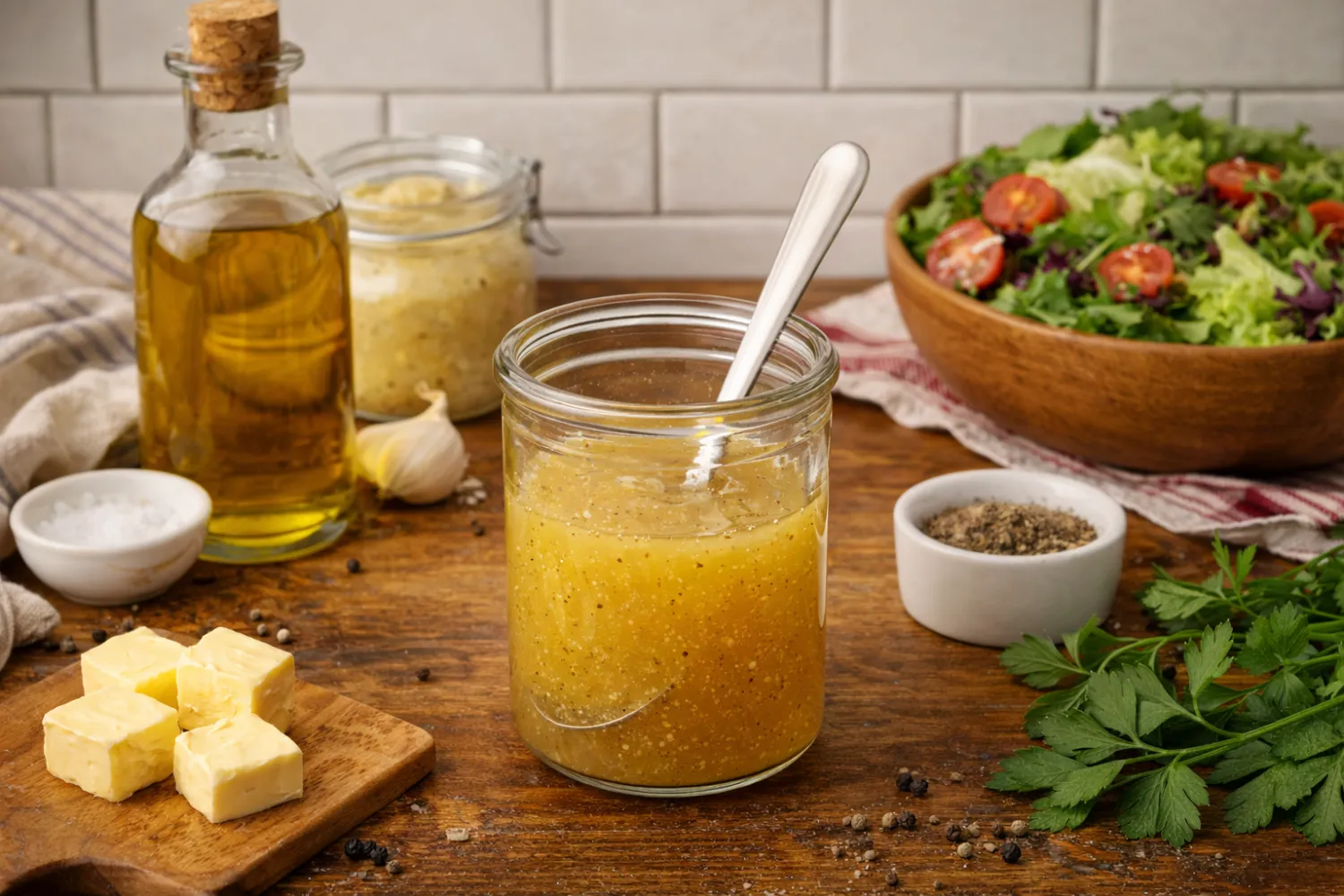
The authentic French vinaigrette with the perfect 3:1 oil-to-vinegar ratio. Made in under two minutes with five pantry staples, this classic dressing is brighter, more flavorful, and infinitely better than anything you’ll find in a bottle. Once you try it, you’ll never go back.
|
|
|
Author: Sarah – Buffalo Bakery
Category: Dressing, Sauce, Condiment
Cuisine: French
|
|
|
Prep Time: 2 minutes Cook Time: 0 minutes |
Total Time: 2 minutes Yield: ½ cup (serves 4-6) |
Ingredients |
|
|
|
Instructions |
|
|
|
| 🥐 Sarah’s Pro Tip | |
|
Make this dressing in an empty Dijon mustard jar! The residual mustard coating the inside of the jar acts as an extra emulsifier, and you waste nothing. Just add your vinegar, oil, and seasonings directly to the jar and shake – it’s the most French thing you’ll ever do in your kitchen. Always dress your salad with your hands, tossing gently to coat every leaf. French cooks never use tongs for this – your hands are the best tools for feeling when every leaf is perfectly and lightly coated. |
|
|
Nutrition Information (per serving):
Calories: 185 | Protein: 0g | Fat: 21g | Carbs: 0g | Sugar: 0g |
|
| Keywords: French vinaigrette, classic vinaigrette recipe, homemade salad dressing, vinaigrette ratio, Dijon vinaigrette, French salad dressing, easy vinaigrette | |
Mastering this simple French vinaigrette is one of the best investments you’ll make in your cooking. It takes two minutes, costs pennies, and once you taste it – really taste it – you’ll wonder how you ever settled for the bottled stuff.
This is the dressing that changed how I think about salads entirely. It’s not a side dish anymore – it’s a destination. A perfectly dressed salad with this vinaigrette can hold its own alongside any main course, and it’s been doing exactly that in French kitchens for centuries.
I’d love to hear how your vinaigrette turns out! Share your creations and variations with our Buffalo Bakery community – drop a comment below or tag us on social media. And if you discover a combination that becomes your new signature, please share it. After all, the best recipes are the ones that get passed along. Bon appétit!