
There’s something absolutely magical about the buttery, flaky layers of a classic French croissant that transforms any ordinary morning into a Parisian café experience. I still remember my first bite of a warm croissant from Du Pain et des Idées in Paris – the way it practically melted in my mouth while I sipped café au lait on a crisp autumn morning.
But let’s be honest: making traditional croissants from scratch can feel intimidating with all that laminating and precise timing. That’s why I’ve developed this easy American version that captures all the essence of a French breakfast without the bakery-level complexity. You’ll get those gorgeous golden layers and that unmistakable buttery taste that makes croissants the crown jewel of French viennoiserie.
Why This Easy Croissant Method Actually Works
When I was learning from Julia Child’s techniques in “Mastering the Art of French Cooking,” I discovered that the secret to great croissants isn’t just about perfect lamination – it’s about understanding how butter and dough work together. This simplified method uses a food processor approach that mimics the layering effect without the traditional folding marathon.
The key difference? We’re incorporating cold butter pieces directly into the dough, then using strategic rolling and folding to create those coveted layers. It’s like the difference between making traditional puff pastry and rough puff pastry – you still get incredible results, just with a more forgiving process.
What really makes this work for American home kitchens is that we’re not fighting against our typically warmer kitchens or trying to source European-style butter with higher fat content.
How to Get Bakery-Quality Results at Home
The biggest mistake I see home bakers make is rushing the chilling process. French bakers understand that cold butter is your best friend – it’s what creates those distinct layers when it melts in the oven, creating steam pockets that puff up the dough.
Here’s what I learned during my apprenticeship at a small boulangerie in Montmartre: temperature control is everything. Your butter should be cold but pliable, like the texture of cream cheese left out for about 20 minutes. Too hard, and it’ll break through your dough; too soft, and it’ll just blend in instead of creating layers.
Another game-changer? Using bread flour instead of all-purpose. The higher protein content gives you better structure, which means your croissants hold their shape beautifully as they rise.
What Makes This Recipe Perfect for American Kitchens
I’ve adapted this recipe specifically for ingredients you can find at any American supermarket. No need to hunt down special European butter or imported flour. Regular unsalted butter works perfectly, and I’ve included timing that works around our busy schedules.
The beauty of this method is that you can make the dough the night before and shape your croissants in the morning. It’s perfect for weekend brunches or when you want to impress house guests without getting up at 4 AM like a professional baker.
I love serving these with homemade strawberry jam and good coffee, but they’re also incredible for making breakfast sandwiches with scrambled eggs and a touch of Gruyère cheese.
Serving Suggestions and French Traditions
In France, croissants are typically enjoyed plain with just a café au lait – the French believe good bread speaks for itself. But I’ve found Americans love a little something extra. Try these warm with apricot preserves or even a drizzle of honey.
For special occasions, you can transform these into pain au chocolat by adding a piece of dark chocolate before rolling. Or create almond croissants by brushing with simple syrup and adding almond paste – a technique I picked up from watching the bakers at Poilâne.
Wine pairing might seem unusual for breakfast, but if you’re doing a French-style brunch, a light Champagne or Crémant pairs beautifully with the buttery richness.
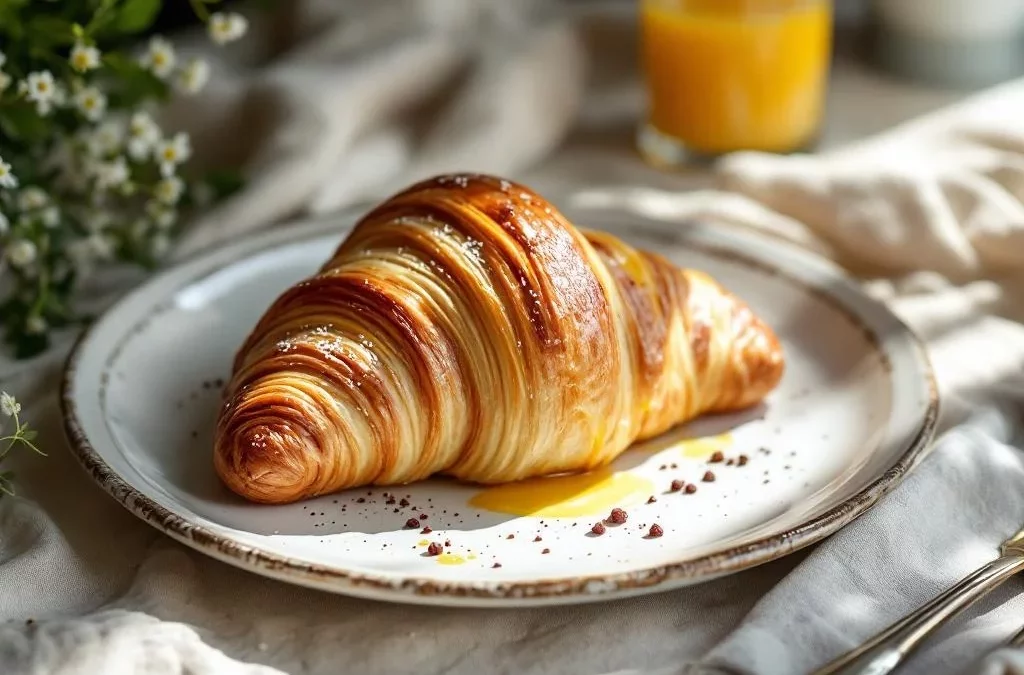
| Classic French Croissant Breakfast (Easy American Version) | |
|
|
|
Buttery, flaky French croissants made easy for American kitchens. This simplified method creates bakery-quality layers without traditional lamination, perfect for weekend brunch.
|
|
|
Author: Sarah – Buffalo Bakery
Category: Breakfast, Brunch, Pastry
Cuisine: French
|
|
|
Prep Time: 25 minutes Cook Time: 18 minutes |
Total Time: 4 hours 43 minutes (includes chilling) Yield: 8 croissants |
| Ingredients | |
|
|
| Instructions | |
|
|
| 🥐 Sarah’s Pro Tip | |
|
The secret to perfect layers? Keep everything cold! If your kitchen is warm, pop the dough back in the fridge for 15 minutes between rolling sessions. I learned this the hard way during a particularly hot Portland summer when my first batch turned into buttery biscuits instead of croissants. Also, don’t skip the egg wash – it’s what gives you that gorgeous golden color that makes these look like they came straight from a Parisian boulangerie. For extra French flair, sprinkle with a tiny bit of flaky sea salt before baking. |
|
|
Nutrition Information (per croissant):
Calories: 365 | Protein: 7g | Fat: 24g | Carbs: 32g | Sugar: 7g |
|
|
Rating:
4.9/
5
(6 reviews)
|
|
| Keywords: French croissant, homemade croissants, easy croissant recipe, breakfast pastry, viennoiserie, flaky croissants, buttery croissants | |
There’s nothing quite like the satisfaction of pulling a tray of golden, buttery croissants from your own oven. The aroma alone will transport you straight to a cozy Parisian café, and the taste? Pure magic. Don’t be discouraged if your first batch isn’t perfect – even French bakers will tell you that croissants are as much about practice as they are about technique.
I’d love to see your croissant creations! Share them with our Buffalo Bakery community and let me know what you filled yours with. There’s something so special about bringing a little piece of France into our American kitchens, one flaky layer at a time.