
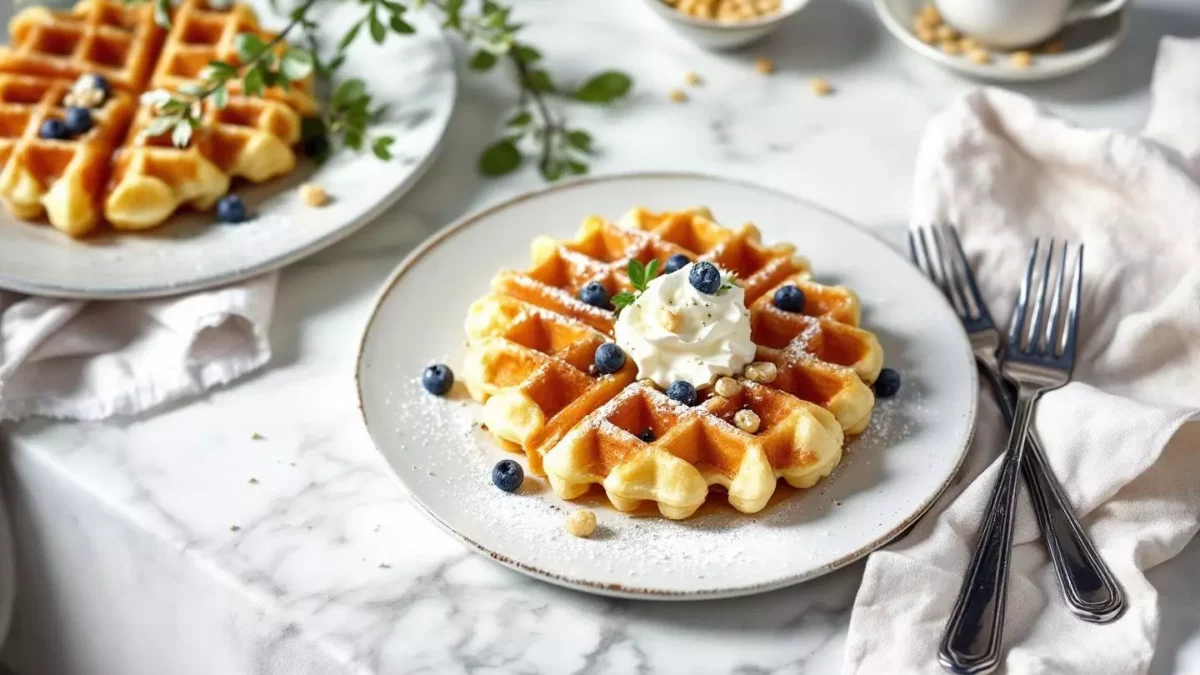
There’s something absolutely magical about the sound of waffle batter hitting a hot iron – that satisfying sizzle that promises golden perfection ahead. Belgian waffles hold a special place in my heart, reminding me of leisurely Sunday mornings in Brussels where I first discovered the art of achieving that perfect contrast: crispy exterior and pillowy-soft interior. Today, I’m sharing the secrets I learned from watching Belgian waffle masters work their magic, adapted perfectly for your American kitchen.
Why Belgian Waffles Are Different from Regular Waffles
Let me clear up a common misconception right away. True Belgian waffles aren’t just thicker versions of American waffles – they’re an entirely different creature altogether.
During my culinary adventures in Belgium, I learned from a charming waffle vendor near Brussels’ Grand Place that authentic Belgian waffles use yeast instead of baking powder. This creates those incredible deep pockets and gives the waffle a slightly tangy, complex flavor that pairs beautifully with both sweet and savory toppings.
The texture difference is remarkable: where American waffles tend to be uniformly fluffy, Belgian waffles offer that coveted contrast of crispy edges and tender centers that make them absolutely irresistible.
The Secret to Achieving Restaurant-Quality Results at Home
Here’s what separates mediocre homemade Belgian waffles from the extraordinary ones you’d find in a Brussels café.
Temperature control is everything. Your waffle iron needs to be properly preheated – I’m talking seriously hot, around 400°F (200°C). This initial blast of heat creates that signature crispy exterior while the yeast-leavened batter stays gloriously soft inside.
The second secret? Patience with your batter. Unlike quick American waffle batters, Belgian waffle batter needs time for the yeast to work its magic. I always tell my Buffalo Bakery readers: this is not a rushed weekend breakfast – it’s a celebration worth the extra time.
Essential Ingredients for Authentic Belgian Waffles
You probably have most of these ingredients in your pantry already, but there are a few key differences from regular waffle recipes.
Active dry yeast is non-negotiable – it’s what gives Belgian waffles their characteristic texture and subtle tang. Don’t try to substitute baking powder; you’ll end up with thick American waffles instead.
Pearl sugar is traditional, but since it’s harder to find in American supermarkets, I’ve perfected a technique using regular granulated sugar that caramelizes beautifully during cooking.
And here’s a tip from legendary chef Jacques Pépin: room temperature ingredients mix more easily and create a smoother batter, which translates to more even cooking.
Common Mistakes That Ruin Belgian Waffles (And How to Avoid Them)
I’ve made every Belgian waffle mistake in the book, so you don’t have to.
Mistake #1: opening the waffle iron too early. I know it’s tempting, but resist! The waffle needs at least 4-5 minutes to develop that golden crust.
Mistake #2: using cold ingredients straight from the fridge. Cold milk and eggs won’t dissolve the yeast properly, leading to dense, heavy waffles.
Mistake #3: overmixing the batter once you add the flour. Just like with French pâte à choux, gentle folding preserves the light, airy texture you’re after.
Make-Ahead Tips for Stress-Free Weekend Mornings
Here’s something that changed my weekend breakfast game completely: you can make Belgian waffle batter the night before.
Simply prepare the batter through step 4, cover tightly, and refrigerate overnight. The slow fermentation actually improves the flavor, creating more complex, slightly tangy notes reminiscent of Belgian café waffles.
In the morning, just let the batter come to room temperature for about 20 minutes while your waffle iron heats up. It’s like having a personal breakfast chef!
Perfect Pairings and Seasonal Variations
Traditional Belgian waffles are often served simply – just a dusting of powdered sugar and maybe some fresh berries. But I love adapting them for American tastes and seasonal ingredients.
For fall, try adding a teaspoon of cinnamon and serving with warm apple compote. Winter calls for a touch of vanilla extract and perhaps some candied pecans.
And if you’re feeling particularly indulgent, a drizzle of real maple syrup (the good stuff from Vermont) transforms these into an absolutely decadent weekend treat.
The beauty of this recipe is its versatility – it works equally well for a elegant brunch party or a cozy family breakfast. I’ve even served smaller versions as a base for strawberries and whipped cream at dinner parties, channeling those sophisticated European dessert presentations.
Ready to bring a taste of Brussels to your kitchen? This recipe has never failed me, and I’m confident it’ll become your new weekend tradition. There’s something so satisfying about mastering a technique that connects us to centuries of Belgian baking tradition – right from our own kitchens.
| Classic Crispy Belgian Waffles | |
|
|
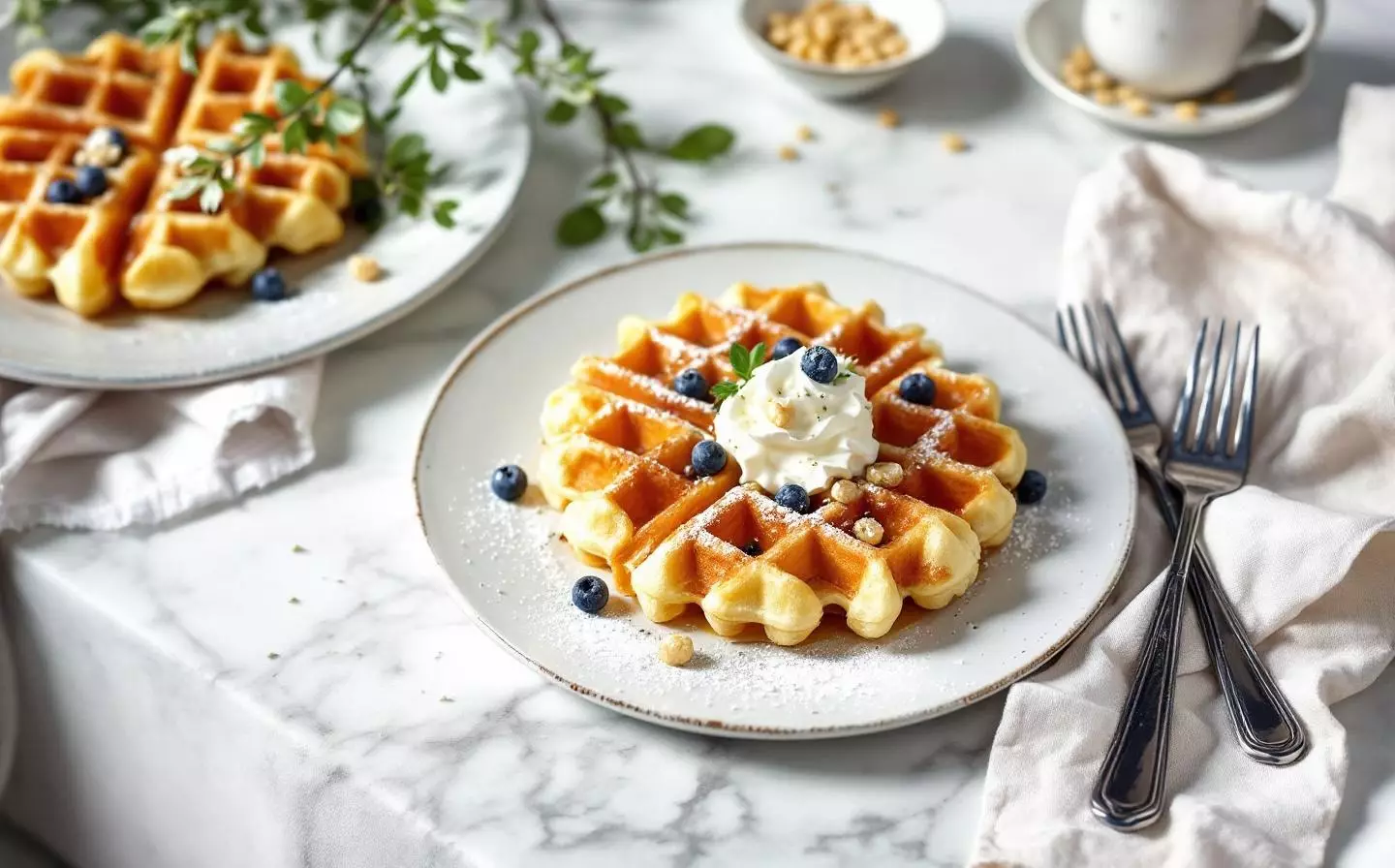
| Authentic Belgian waffles with crispy golden exteriors and tender, yeast-leavened interiors. These restaurant-quality waffles bring the taste of Brussels cafés to your home kitchen. | |
| Author: | Sarah Mitchell, Buffalo Bakery |
| Category: | Breakfast |
| Cuisine: | Belgian |
| Prep Time: | 15 minutes (plus 1 hour rising) |
| Cook Time: | 20 minutes |
| Total Time: | 1 hour 35 minutes |
| Yield: | 6 large Belgian waffles |
| 🧑🍳 Ingredients | |
|
|
| 📝 Instructions | |
|
|
| 🥐 Sarah’s Pro Tip | |
|
The secret to extra-crispy Belgian waffles is patience! Don’t open the waffle iron until the steam stops emerging – this usually takes a full 4-5 minutes. If your waffles aren’t crispy enough, increase your iron’s temperature setting and cook for an additional 30-60 seconds. For make-ahead convenience, prepare the batter the night before and refrigerate – the slow fermentation actually improves the flavor! |
|
| 📊 Nutrition (Per Waffle) | |
| Calories: 285 | Carbs: 38g | Protein: 8g | Fat: 11g | Fiber: 1g | Sugar: 4g | |
| Keywords: | Belgian waffles, crispy waffles, yeast waffles, authentic Belgian recipe, weekend breakfast, Brussels waffles |