
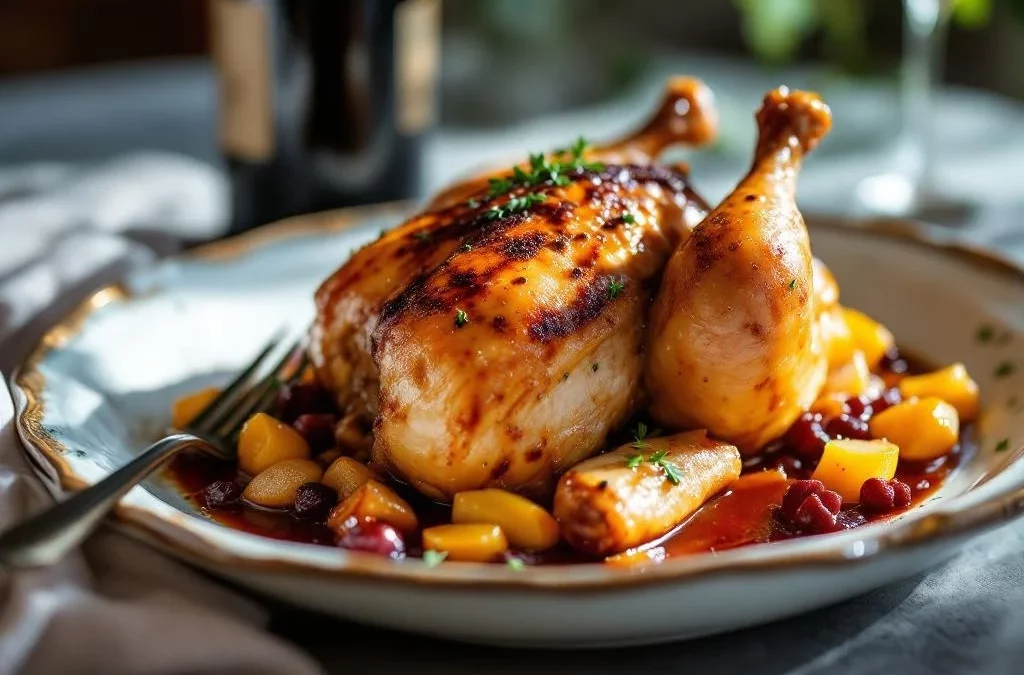
There’s something absolutely magical about the way coq au vin transforms your kitchen into a Parisian bistro. This classic French chicken in wine recipe is one of those dishes that seems intimidating at first, but once you master it, you’ll wonder why you waited so long to try it.
I still remember the first time I tasted authentic coq au vin at Bistrot Paul Bert in the 11th arrondissement – the chicken was so tender it practically fell off the bone, and the wine sauce was rich enough to make me close my eyes and savor every single bite. Today, I’m sharing my foolproof version that brings all those Parisian flavors right to your American kitchen.
What Makes Coq au Vin So Special in French Cuisine?
Coq au vin literally translates to “rooster in wine,” and it’s one of France’s most beloved comfort foods. This dish originated in Burgundy, where resourceful cooks would braise tough old roosters in local red wine to tenderize the meat.
Julia Child famously popularized this recipe in America through “Mastering the Art of French Cooking,” and she always emphasized that the key is using good quality wine – if you wouldn’t drink it, don’t cook with it. The wine doesn’t just add flavor; it actually breaks down the proteins in the chicken, creating that signature melt-in-your-mouth texture.
What I love most about coq au vin is how it embodies the French philosophy of cuisine de grand-mère – grandmother’s cooking. It’s rustic, hearty, and designed to bring families together around the dinner table.
How to Choose the Right Wine for Your Coq au Vin
The wine you choose will make or break this dish, and I learned this lesson the hard way during my early cooking days in Portland. A good Burgundy Pinot Noir is traditional, but any dry red wine with good body will work beautifully.
I typically reach for a Côtes du Rhône or Oregon Pinot Noir – both are readily available in American supermarkets and won’t break the bank. The wine should have enough tannins to stand up to the long braising process but not be so bold that it overwhelms the chicken.
Pro tip: buy two bottles – one for cooking and one for sipping while you cook. Trust me, this recipe tastes even better when you’re in a good mood!
Essential Techniques for Perfect French Coq au Vin
The secret to restaurant-quality coq au vin lies in proper technique, not fancy ingredients. First, you’ll want to brown your chicken pieces really well – this creates the fond (those beautiful brown bits) that will become the base of your sauce.
Don’t skip the step of flambéing with cognac if you have it on hand. This isn’t just for show – it adds incredible depth of flavor and helps burn off the harsh alcohol notes. If you’re nervous about flambéing, simply let the cognac simmer for 2-3 minutes instead.
The braising process should be gentle and slow. Low and slow cooking allows the wine to penetrate the meat while the vegetables break down into a silky, rich sauce. I like to use a heavy Dutch oven for even heat distribution.
Make-Ahead Tips and Storage Secrets
One of the best things about coq au vin is that it actually tastes better the next day. The flavors have time to meld and deepen, making it perfect for entertaining.
You can prepare the entire dish up to 2 days ahead and simply reheat gently on the stovetop. I often make a double batch on Sunday and portion it out for easy weeknight dinners throughout the week.
For storage, let the dish cool completely before refrigerating. It’ll keep for up to 4 days in the fridge, and you can even freeze portions for up to 3 months.
Classic Coq au Vin
Prep: 20 mins |
Cook: 1 hr 30 mins |
Total: 1 hr 50 mins |
Serves 6
|
|
Ingredients:
|
Instructions:
|
| 🥐 Sarah’s Pro Tip | |
|
The key to silky-smooth coq au vin sauce is the beurre manié (butter and flour paste) technique I learned from watching Jacques Pépin. Mix equal parts soft butter and flour with your fingers until it forms a smooth paste, then whisk it into your simmering stew. This classic French thickening method prevents lumps and gives you that glossy, restaurant-quality finish. Add it gradually and let each addition dissolve completely before adding more – patience is everything here! |
|
There’s nothing quite like the satisfaction of watching your family’s faces light up when you serve this gorgeous dish. Coq au vin is more than just dinner – it’s an experience that transforms any evening into something special.
I love serving this with creamy mashed potatoes or crusty French bread to soak up every drop of that incredible wine sauce. Pair it with the same wine you cooked with, and you’ve got yourself a meal worthy of any Parisian bistro.
Have you tried making coq au vin before? I’d love to hear about your experience in the comments below, or tag me on social media @BuffaloBakery when you make this recipe. There’s nothing I enjoy more than seeing how our Buffalo Bakery community brings these classic French flavors to life in their own kitchens!